Letterbox co-signature
- Proves
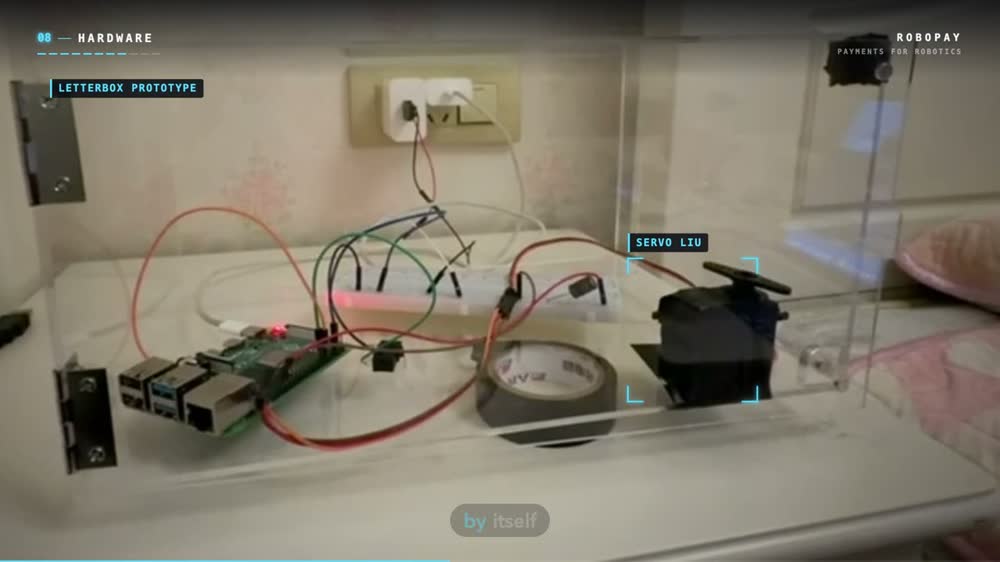
- The car signs the letterbox’s one-time code. A weight sensor confirms the parcel, and the letterbox co-signs.
- Can’t stop
- A code relayed from far away.
A delivery car drives through the city. When it arrives, money moves. RoboPay is the payment layer for machines and AI agents in the physical world.
A research group at HTW Berlin, building toward a startup. Code on GitHub.
The money goes into an escrow on Solana. Nobody can touch it yet. create_delivery()
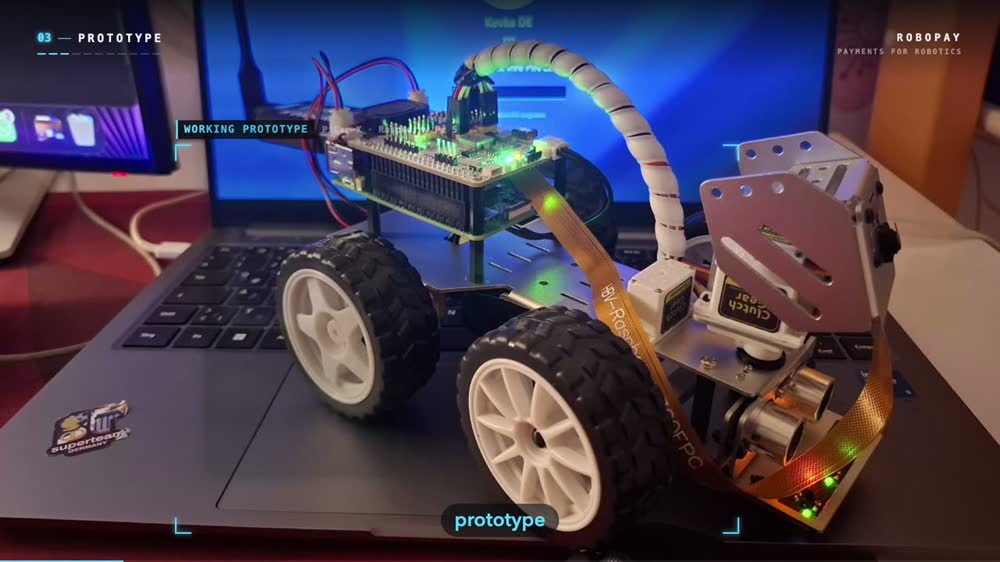
Our PiCar-X leaves with the parcel. The payment waits while it moves.
The car’s camera reads the QR code on the box. No code, no payout.
The car signs the delivery on-chain. Anyone can check it in the Solana Explorer. confirm_delivery()
The escrow releases the 0.2 SOL to the car’s owner, found through its peaq Machine-NFT. close_escrow()
A robot cannot open one. It has no passport, no address and no signature.
Cards need a person to hold them, approve them and dispute them.
Money moving says nothing about whether the parcel arrived.
Money and the real world do not talk to each other. RoboPay makes them.
One code is not enough. So the payout depends on two checks, and the second one closes the gap the first one leaves open.

Staex keeps the robot securely connected.

peaq gives every car a verifiable identity, its Machine-NFT. That is how RoboPay finds the owner to pay.
An escrow program with three calls: create_delivery, confirm_delivery, close_escrow.
Our HTW Berlin paper asks one question: can a moving machine settle a payment on-chain the moment it arrives?


From delivery trigger to a confirmed Solana transaction. One indoor run, target 15 s.
Outdoor GPS test runs planned to prove it.
Nodes in the next design: one fixed drop point and two mobile carriers.
Agent payments on the x402 protocol by April 2026. Machine payments are arriving.
The gap. No prior work combines a moving device with an on-chain payment that arrival triggers. The demo car proves delivery with a QR code. The research track tests GPS arrival.
Working draft, September 2026. Supervised by Prof. Dr. Alexandra Mikityuk.
Forecasts differ 2–5× between sources. Sources: StartUs Insights, Nevermined, bex.co (2026); RoboPay project paper §15. Bar lengths are illustrative, not to scale.
want an instant notification
would pay a premium
say yes to a delivery robot
find blockchain as safe as their bank
38 responses · first round · mostly aged 18–24. The last number is the one we have to earn.
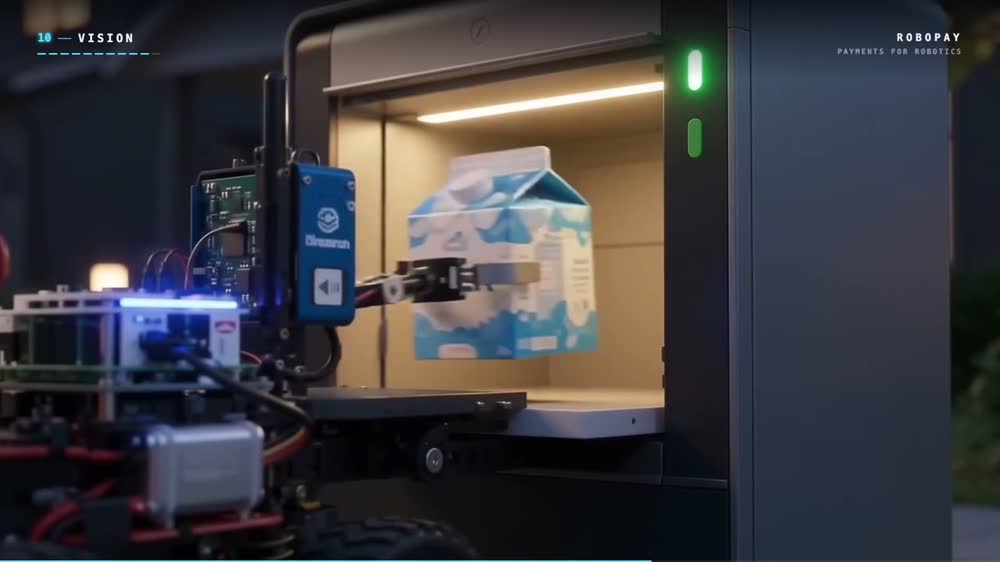
One payment stack, every robot. Cars today. Drones, boats and humanoids next.
RoboPay grows out of the Machine Economy Lab at HTW Berlin. We build the prototype, publish the research and are working toward a company. Built for the Colosseum Crypto World’s Fair.
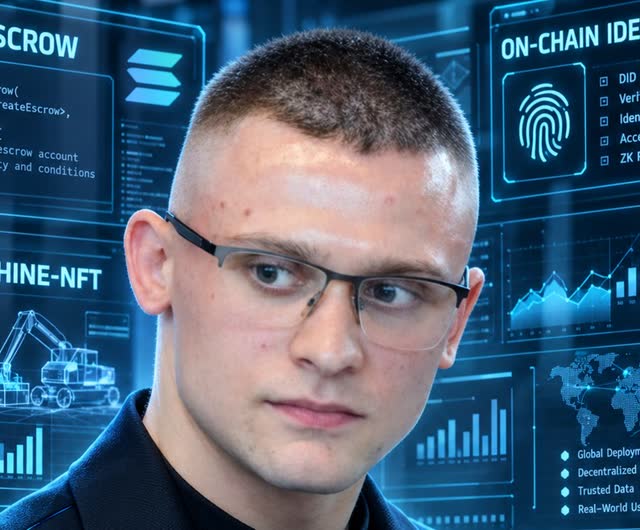
Founder and Technical Lead
Car programming, Solana escrow, peaq integration.
Staex, HTW Berlin
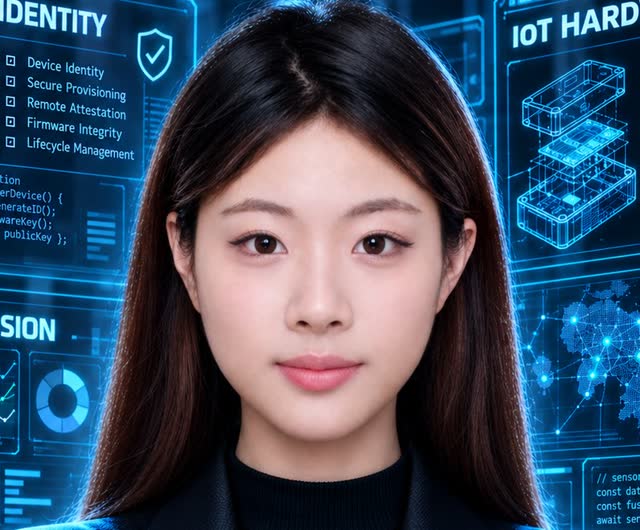
Hardware and Mechatronics
Smart mailbox (Unit A).
Tongji University, HTW Berlin
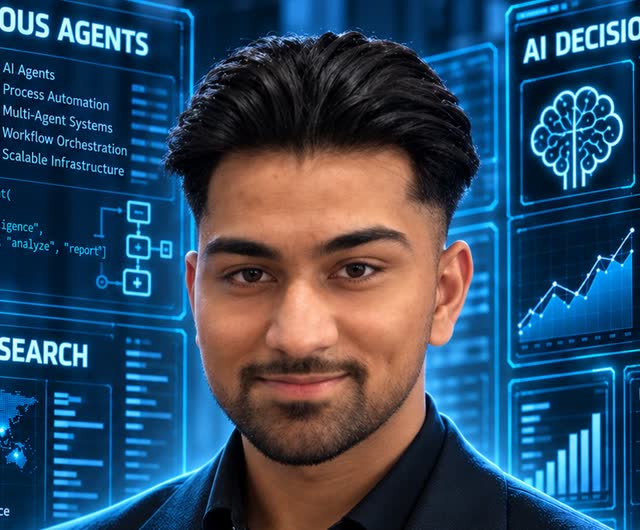
Business and Market Research
Car hardware assembly, market research, survey.
HTW Berlin
Supervisor
HTW Berlin. CEO of Staex GmbH.
HTW Berlin, Staex
RoboPay is the payment layer for machines and AI agents in the physical world. A machine gets paid automatically when it proves it did the job, for example when a delivery car arrives.
The buyer locks 0.2 SOL in an escrow on Solana. The car drives to the box and scans its QR code. It then signs the delivery on-chain, and the escrow releases the money to the car’s owner.
A robot has no bank account, cards are made for people, and a payment alone is not proof that the parcel arrived. RoboPay ties the payment to proof of delivery.
Two layers. The QR handover works on the car today. A letterbox co-signature with a weight sensor is the planned next step and closes the gap of relayed codes. Our research also tests GPS arrival detection as a trigger.
Solana for escrow payments, peaq for the car’s verifiable Machine-NFT identity, and Staex for secure connectivity.
It runs on real hardware as a working prototype: a PiCar-X delivery car and a letterbox prototype. Payouts that follow the Machine-NFT owner are built and in testing.
A student research group, the Machine Economy Lab at HTW Berlin: Kevin Ehrentraut, Xinyan Liu and Yashdeep Singh, supervised by Prof. Dr. Alexandra Mikityuk. We are working toward a startup.